About Me
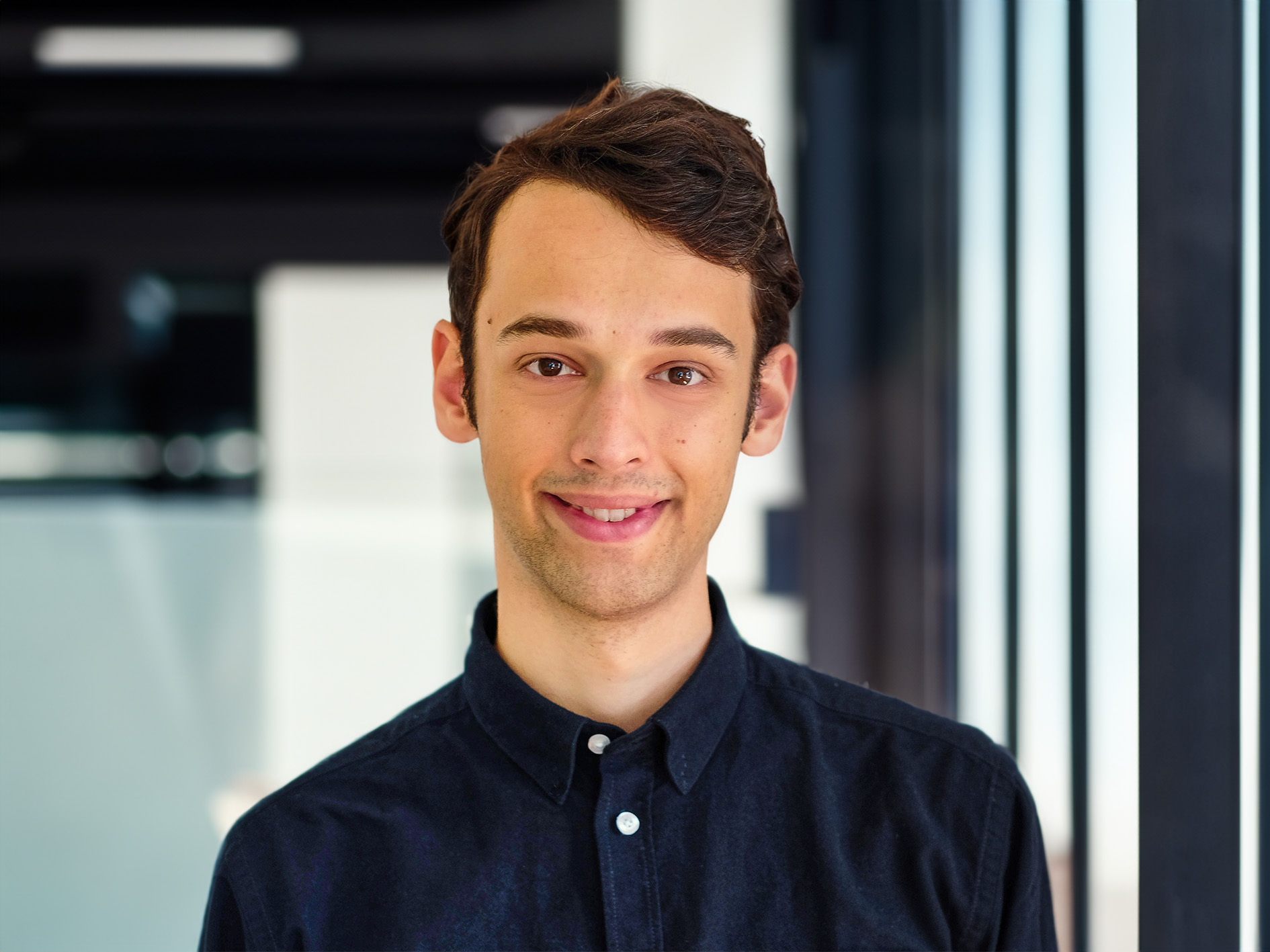
I am a doctoral researcher in health economics at the University of Basel. My work is at the intersection of applied econometrics, data science, and environmental and health economics.
My research uses large spatial and temporal datasets to study how environmental change, economic activity, and public health interact. Methodologically, I am interested in empirical strategies and reproducible data workflows that turn complex raw data into credible measurement and policy-relevant evidence.
I work primarily with Python, SQL, R, geospatial data, satellite imagery, and high-dimensional panel datasets. Across my projects, I combine applied econometrics, machine learning, and scalable data engineering to construct analysis-ready datasets and address substantive research questions.
Research Interests
- Environmental and health economics
- Applied econometrics and causal inference
- Geospatial data science and satellite-based measurement
- Machine learning for empirical measurement
- Reproducible and scalable research workflows
Current Research
Growth and Temperature: Large-Scale Environmental Data Analysis
This project studies how local economic growth affects local temperatures. It combines nighttime lights, land-surface temperature, land-cover, and administrative data to construct long-run spatial panels and estimate how changes in economic activity are reflected in local warming patterns.
Land Use Change, River Pollution and Health Externalities in Brazil
This project links land-use change, river networks, water-quality sensors, population data, and health outcomes in Brazil. A central part of the work is constructing upstream exposure measures from drainage areas, river reachability relationships, and land-cover changes for downstream econometric analysis.
Software
duckreg: Adding usability and IV for Fast Out-of-Memory Regressions on SQL Backends
I am extending duckreg, an open-source Python package for running regression models on datasets too large to fit in memory. The package uses SQL-based aggregation and supports scalable workflows for linear, fixed-effects, and Instrumental Variable models on DuckDB.
Publications
Public charging infrastructure and electric vehicles in Norway
with Johannes Rode
Energy Policy, 160, 2022
[Dataset and Replication Material]
Is large-scale rapid CoV-2 testing a substitute for lockdowns?
with Marc Diederichs, René Glawion, Peter G. Kremsner, Timo Mitze, Gernot J. Müller, Dominik Papies, and Klaus Wälde
PLOS ONE, 17(3): e0265207, 2022
[Dataset and Replication Material]
Academic Background
- PhD in Health Economics — University of Basel, since 2024
- M.Sc. in Data Science in Business and Economics — Eberhard Karls University of Tübingen, 2024
- Semester Abroad — Monash University, Melbourne, 2023
- B.Sc. in Business Information Systems — Technical University of Darmstadt, 2021
Previous Research Experience
Research Assistant
Monash University, Aug 2023 – Jan 2024
- Contributed to research using daylight satellite imagery to measure economic activity in developing countries
- Built and trained neural networks for semantic segmentation, including ResNet, EfficientNet, and Vision Transformer architectures in TensorFlow
- Worked on cloud-based and reproducible image-processing workflows
Student Research Assistant
Johannes Gutenberg University Mainz, Sep 2020 – Oct 2021
- Co-authored a paper on rapid COVID-19 testing and reopening policies, published in PLOS ONE
- Led data management, visualization, and statistical programming in R and Stata
- Supported empirical macroeconomic research and research communication
Contact
Feel free to get in touch via felix.schulz@unibas.ch. You can also find me on LinkedIn and GitHub.